Analysis of the logical correctness of FMS using Petri Nets


Petri Nets
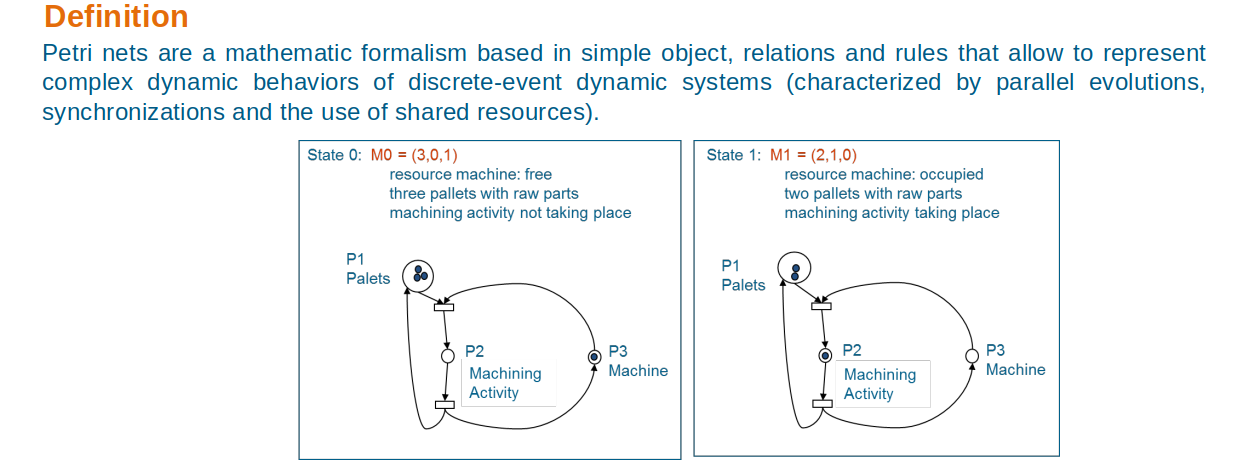
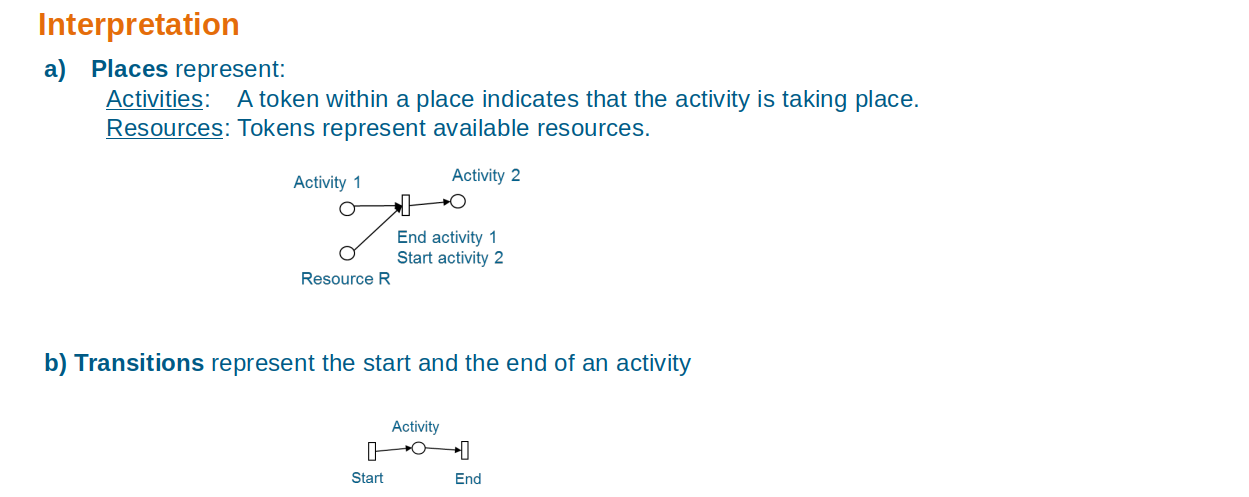


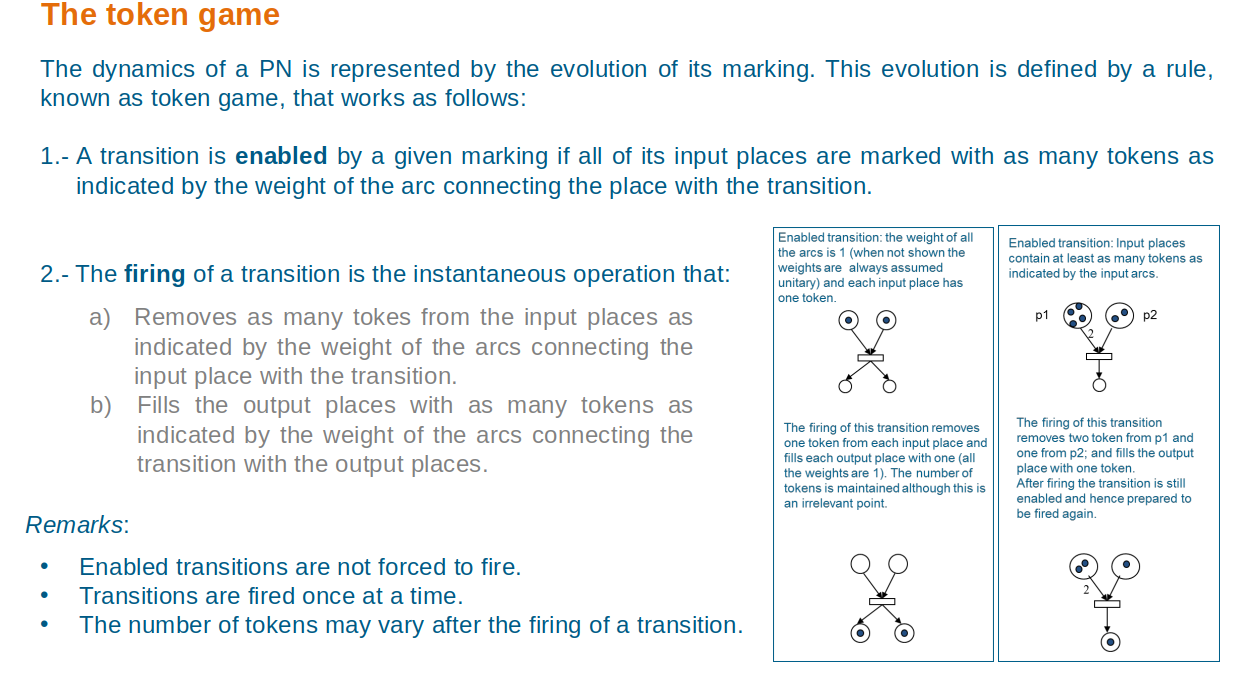

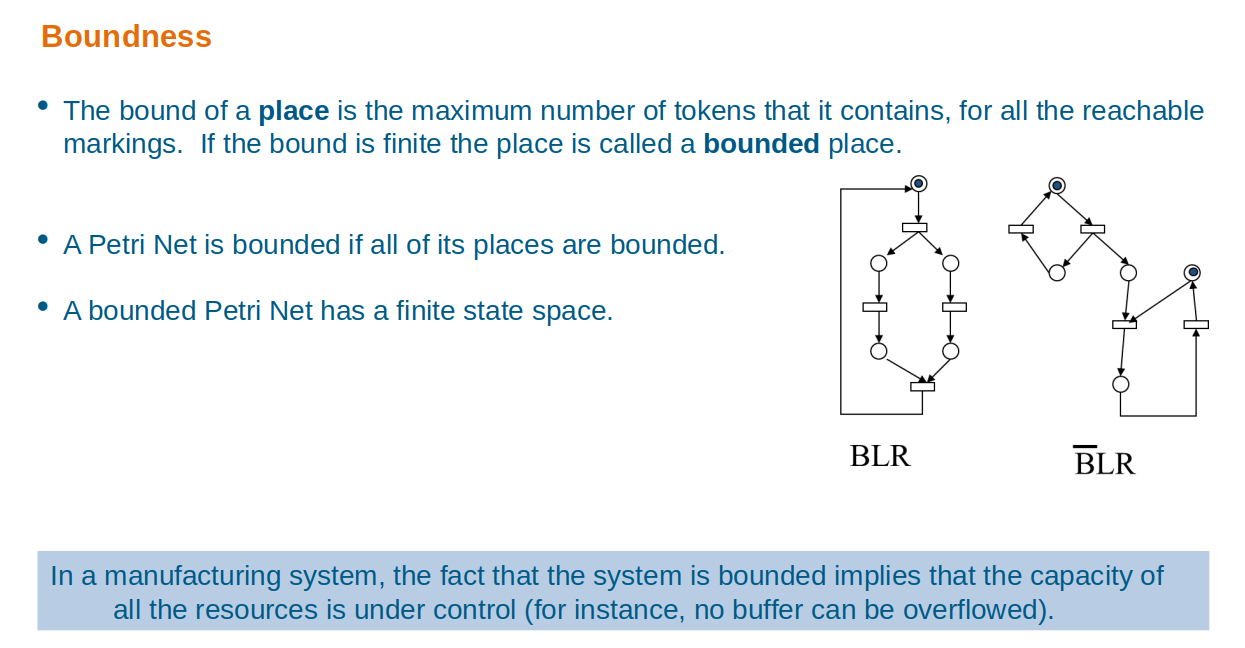
Modeling FMS
The main features that Petri Nets provide for the modeling of flexible manufacturing systems are the following:
- They can easily represent the concurrence, causality or the synchronization of activities, as well as the conflicts and the use of shared resources.
- The design can be done either in a bottom-up or top-down manner.
- The graphic representation eases the documentation and the monitoring of the processes.
- The formal semantics allows a rigorous analysis of the qualitative properties of the system, as well as the automation of code generation for the control or the simulation of the system.
- Different meanings can be assigned to places, allowing to cover with a single tool several phases of the system design (e.g. planning, scheduling, real-time control).
- They can easily represent the flexibility in FMS.


Documentation
- Pdf slides.
- The Platform Independent Petri net Editor 2 software (PIPE2).